
Bad news feels pervasive at the best of times. But good things did happen in 2025 — these are just some of the wins and signs of progress worth reflecting on. Here’s to many more achievements in 2026…
January: Thailand enacted Marriage Equality Act to officially become first country in Southeast Asia to legalise same-sex marriage.
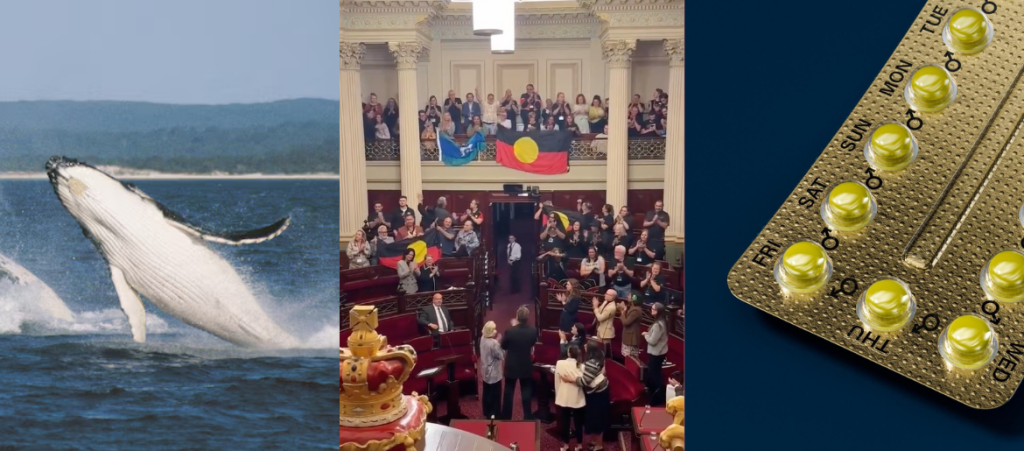
May: NSW government passed an amendment to expand abortion access.
Vatican City became completely solar powered, making it the eighth country in the world to be 100% powered by renewables.
June: Denmark introduced world-first law to give citizens’ copyright over their face, voice and body to protect against AI-generated deepfakes.
Antoinette Lattouf won unlawful termination case against the ABC.
July: UK government lowered the voting age, which will allow 16- and 17-year-olds to vote at the next general election in 2029.
Hormone-free male contraceptive pill passes first human safety test.
October: UK passed Renters’ Rights Act, banning no-fault evictions, rent bidding, and introducing strict timeframes for landlords to fix health and safety issues.
Green sea turtles reclassified from ‘endangered’ to ‘least concerned’ by International Union for Conservation of Nature.
Eastern Australian humpback whale population counted at well above pre-whaling levels.
November: Victoria became first Australian jurisdiction to sign a treaty with Indigenous traditional owners.
The Victorian government signed the 34-page treaty agreement on November 12, making it the first formal treaty with Indigenous traditional owners in the country. This is the result of more than a decade of work by Indigenous leaders in Victoria, in particular by the First Peoples’ Assembly of Victoria and the Yoorrook Justice Commission.
The treaty will establish and protect Gellung Warl, a new body of democratically-elected representatives to consult on laws and policies that affect Indigenous communities.
Gellung Warl is comprised of three functions — the existing First Peoples’ Assembly; Nyerna Yoorrook Telkuna, to continue to the work of the Yoorrook Justice Commission; and Nginma Ngainga Wara, an Outcomes and Justice Commission that will be able to question ministers, hold inquiries and committees to make sure that government bodies and programs are doing what they are supposed to.
By signing the treaty the government also commits to including truth-telling in school curriculums, a formal apology to Indigenous people (given in Parliament on December 9) and more widespread use of traditional placenames.
The treaty consultation process is currently underway in NSW and the ACT. In Tasmania, Queensland and the NT, conservative governments have scrapped treaty plans that were underway. South Australia’s treaty process is on indefinite hold, despite the government being in favour. WA is not pursuing any treaty process.
December: Australian government expanded programs providing legal and financial help to sexual violence victim-survivors nationwide.
Comments are closed.