
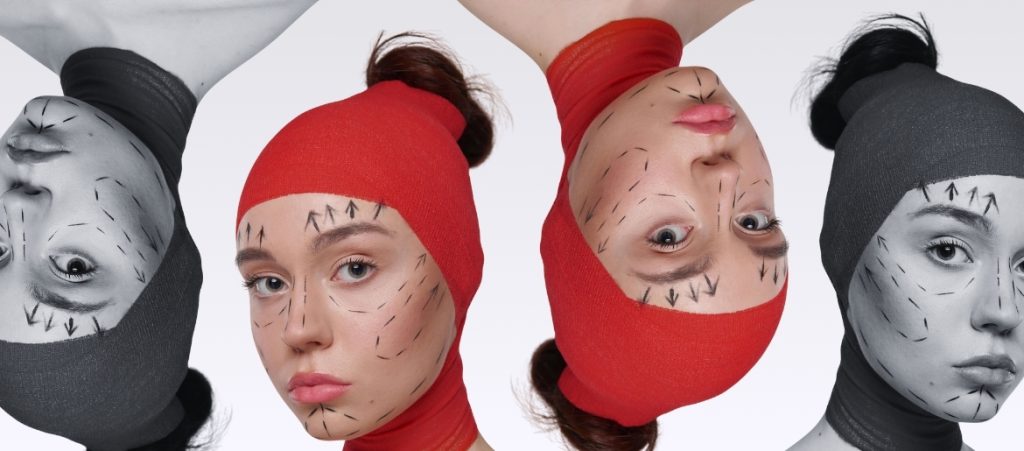
“Ok, I’m probably going to get humbled, but how old do you think I look?” Women in their 20s, 30s, 40s and 50s ask this question over and over and over on TikTok. The responses don’t go exactly how you might expect. Yes, those who look ‘younger than their age’ are complimented, showered in praise to the point of worship. And those who look ‘older than their age’ are not only insulted but openly mocked, given condescending advice on what to ‘fix’ about their face, hair and overall vibe.
But, so too are the rest of the ill-advised askers — in the comments, people throw out ages that are clearly a decade or more off, intended to taunt. I once read a comment that said, “27? What, in dog years?”
Both those who ask and those who answer are participating in the same obsession: scrutinising and policing the face in the extreme way we used to scrutinise and police the body.
Anti-ageing is the new diet culture.
To be clear, I’m not saying society has achieved body liberation. After a brief flirtation with body positivity, thin is very much back in. But while mainstream media now mostly refrains from criticising the bodies of women celebrities, the way it used to write about women in the 90s and early 00s is echoed in today’s facial discourse.
The tabloids would do the dirtiest work, screaming from front covers and unflattering paparazzi spreads that Britney Spears, Tyra Banks, Jessica Simpson, Kate Winslet and Nicole Richie were hideously fat. Pitting the “Best & Worst Beach Bodies” against each other was a regular feature, zooming in and putting big red circles around unforgivable flesh.
This was accompanied by the content in more ‘civilised’ women’s lifestyle and fashion magazines. These would never publish crass paparazzi photos, but instead helpfully told readers about Jennifer Aniston’s preferred no-carb diet, workouts to shrink your thighs, the most slimming swimsuits to buy, and the latest gadget to zap your cellulite away.
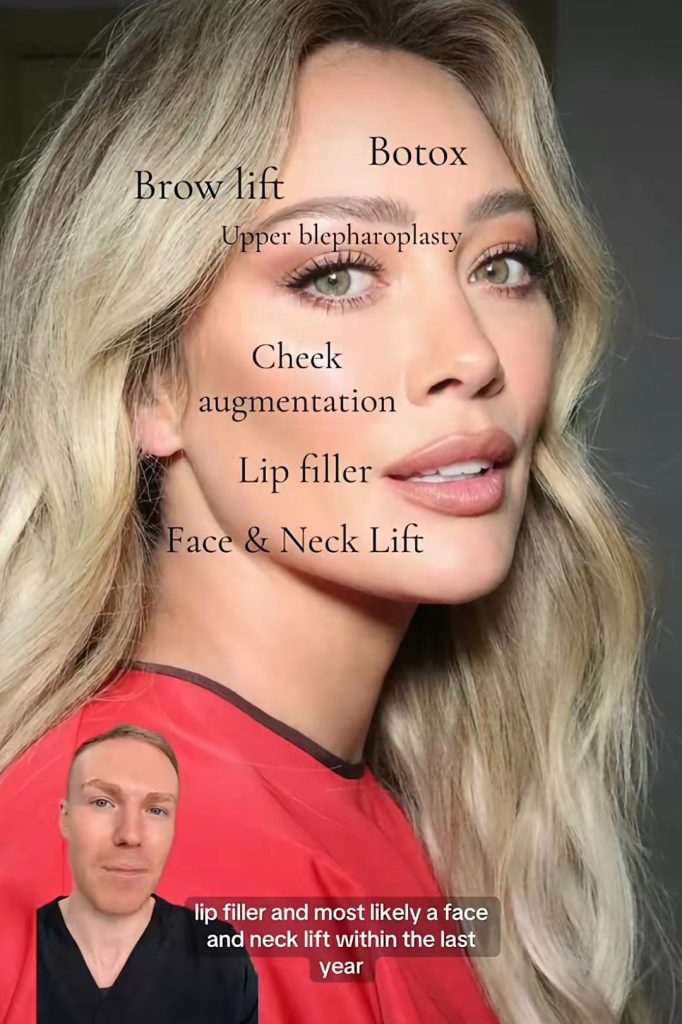
Now, social media has replaced tabloids for a new generation of women. It’s where the most overt criticism of celebrities’ faces is now done. On digital platforms cosmetic injectors, estheticians, dermatologists and plastic surgeons thrive. They speculate on what treatments (it’s not called ‘work’ anymore) celebrities have done to achieve their impossibly snatched, sometimes uncannily youthful and lineless faces.
Of course, none of these professionals know for sure, because the celebrities are not their clients. But it doesn’t stop them from using those same old tabloid tactics — zooming in close, highlighting ‘problems’ or ‘telltale signs’ with a circle or arrow, side-by-side comparisons that use photos years apart or contrasting an unflattering paparazzi photo with glam red carpet pic.
Magazines and other women’s media still play the same role they used to, harmoniously providing the more palatable information on the latest cosmetic innovations and techniques to ‘refresh your face’ in their beauty sections. Tretinoin and niacinamide, peels and lasers, botox, blepharoplasty, ponytail facelift, fat grafting, pdo thread lift.
The Cut’s recent feature story, “The Forever-35 Face”, really got to the core of it: there are really only two types of face lifts, the SMAS lift and the deep-plane facelift. These days, celebrities — and apparently, everyone else who can afford it — are getting the latter. The writer Bridget Read catches up with one of the subjects who is recently recovered from deep plane surgery: “At the table next to us is another group of women, some of whom are in that de-aged zone, others who still have a revealing droop, a jowl, a line. I have an urge to card them all like a bouncer, just to see how far off my guesses are. One classic tell remains a person’s wrinkled hands. But ‘not for long,’ one doctor assures me. ‘We’re doing amazing things with hands.’”
The expectation of prolonged youthfulness has always existed for female celebrities, but for everyday women to demand it of each other feels new. For one thing, the COVID-19 pandemic undoubtedly played a role, as it sent us all online to view each other’s faces on a screen, detached from the body and distorted by the lens of a smartphone or webcam. Even worse, it sent us all online to view our own faces on a screen, in the distracting corresponding box of a Zoom call or corner of a FaceTime. For another thing, posting photos and videos on the same platforms as models and celebrities means your face inevitably ends up next to theirs, raising the standards somewhat.

Botox is now entirely normalised, including the so-called ‘preventative’ botox that some injectors recommend you start at age 22. The old “What I Eat In A Day” vlogs (inspired by the celebrity “Day On A Plate” articles in the mags) have been replaced by elaborate skincare and cosmetic treatment routine videos.
The ‘solutions’ to the ‘problem’ of ageing are now well understood and readily available. Which means, as I wrote in 2023: “A woman who visibly ages or has drooping eyelids or allows her face to change [has] committed a moral failure.”
Young women eagerly police each other’s success or failure to halt ageing online, enforcing strict standards of personal accountability — as if time is something that anyone could beat.
And just as it was with diet culture, the policing has to be disguised as something more serious than vanity. Conflating ‘health’ with ‘youthfulness’ works just as well as when it was conflated with ‘thinness’. The “guess my age” videos of anyone with visible skin texture or fine lines are filled with condescending comments of faux-concern about sun damage, skin cancer and nutrition.
Will Generation Alpha look back in pity at the cartoonishly obsessive way the women of the 2020s tried to freeze their faces in time, the same way we reflect with sadness on the impossible body standards of the 90s and 00s? I can only hope the trap will look so obvious they can just step around it.
Comments are closed.