
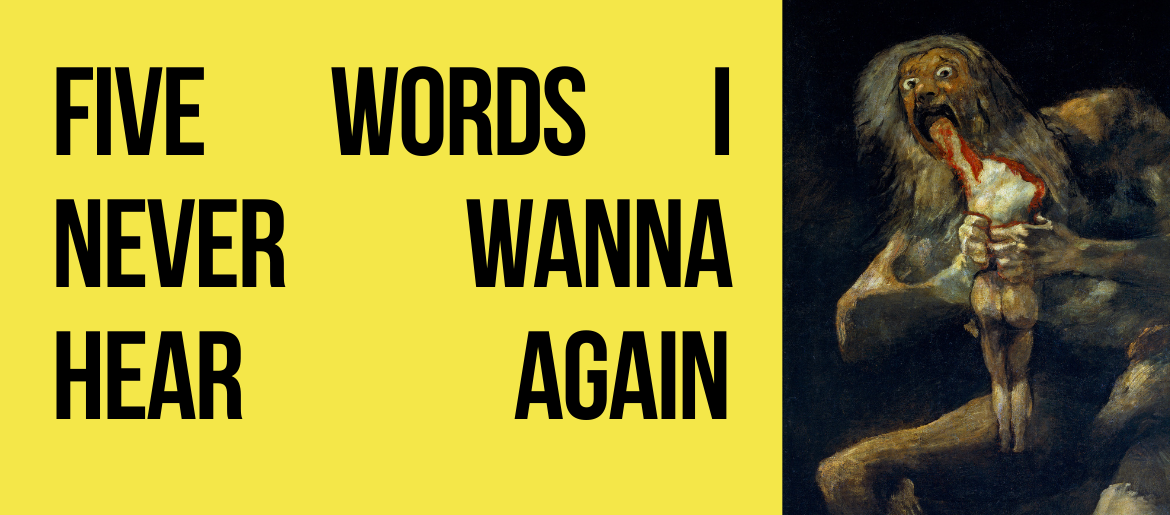
Five words I never want to hear again: "The left is eating itself"
The political left can’t agree long enough to win... or so we’ve been told. The loaded history of the phrase “the left is eating itself” tells a different story.

On a June evening in 1884, a group of around 70 people — 50 women and 20 men — gathered at a cafe in Melbourne to decide how they would campaign for the women’s right to vote. It was one of the earliest meetings of the Victorian Women’s Suffrage Society, the first group of its kind in the country.
Archived newspaper reports tell us that, among other things, suffragist Martha Webster suggested the group focus on only securing voting rights for the 1800 women in the colony who were “ratepayers and householders”. She felt it would be an easier first win, and the group could push for the rights of the remaining 195,000 women later.
Her proposal was rebutted by a passionate speech from Henrietta Dugdale, who called the idea “barbarously unjust … It would not be justice to give the votes to those women only who were ratepayers.” Webster’s proposal was voted down by the others, and the matter was decided: they would campaign for all women.
If this meeting took place in 2025, would the exchange between Webster and Dugdale have prompted cries of “the left is eating itself”?
That five-word phrase has whizzed around the political discourse with increasing speed and frequency in the past 18 months.
It’s treated as some kind of truth. In reality, it’s a thought-terminating cliché: used to shut down an argument, dismiss criticism, or stop the cognitive dissonance that comes from realising your progressive politics might be flawed.
Withholding your vote from Kamala Harris unless she agrees to stop funding Israel’s genocide? The left is eating itself. Criticising a progressive influencer for sharing voting misinformation? The left is eating itself. Australian Greens booting one of its co-founders from the party over transphobia? The left is eating itself.
Where did the phrase originate? Jacques Mallet du Pan was an 18th century political writer who produced propaganda on behalf of the French monarchy. Mallet du Pan was a counter-revolutionary and a royalist; during the French Revolution he fled the country and wrote a widely circulated essay about the uprising, which included the phrase: “A l'exemple de Saturne, la révolution dévore ses enfants”, translated to “Like Saturn, the Revolution devours its children”.
Over time, this evolved into the phrase bandied about today. “The left eats itself” is the invention of a ruling-class propagandist for the sole purpose of delegitimising and destabilising left-wing political movements as they build momentum.
Once you understand the origins of the phrase, it becomes clear how it works. Painting the political left as purists for whom nothing is ever good enough, who will never agree with each other and turn on you at the first opportunity, is meant to intimidate people from joining left-wing movements. It implies that the political right, by contrast, are a “broad church” who don’t let different ideas divide them — and that someone who is engaging with politics for the first time will be more welcomed by the right.
But that is quite obviously not true.
There are endless examples of right-wing groups and movements fighting with each over ideological splits to the point of kicking people out and cutting them off.
The fight between the Liberal and National parties over net-zero policy — a stand-in for accepting the reality of climate change — caused the Coalition to split up for the sixth time in its 100-year history. Supporters of the anti-immigration movement can’t agree on the extent of white nationalism they should allow, with rallies shrinking after the involvement of neo-Nazis. The Trump administration’s hypocritical handling of the Epstein files has caused a major rift within MAGA. Key MAGA congresswoman Marjorie Taylor Greene has resigned from the Republican party in protest, and Trump called her a traitor.
Why don’t we say any of this is “the right eating itself?” Because the term is only ever intended as a weapon against the left.
I’ve had enough of hearing it. Not only is it a falsehood, but the “eating” in question is the very criticism and contest of ideas that is required for political progress. Often it’s the more prominent, powerful or centrist voices who use the phrase to dismiss critique that comes from further left.
In 1888, four years after that initial meeting, Brettena Smyth and several other members of the Victorian Women’s Suffrage Society left the group over its refusal to adopt the then-radical stance that women should have access to effective contraceptives and that motherhood should be optional. They ran their own political group for a few years, until the United Council for Woman Suffrage was launched to bring all individual groups under one banner to coordinate lobbying efforts. In 1908 Victorian women won the right to vote — the last state in the country.
Was Smyth’s commitment to women’s reproductive autonomy just side-sniping hater behaviour? Of course not. What was then a ‘fringe’ critique is now a mainstream expectation of feminists and the left.
None of these colonial women were particularly concerned about the lives of Aboriginal women either. Pearl Gibbs, one of the Aboriginal women who was instrumental in securing Indigenous suffrage, often spoke to ‘white women’s’ groups, criticising their treatment of Aboriginal people. She told the Progressive Housewives Association in 1938: “What has any white man or woman done in this country to help my people? The [Aboriginal people] are now taking up the matter for themselves and asking for citizenship. It is not ridiculous or silly for them to ask for citizenship in a country that is their own.”
Ironically, the reference to “eating itself” makes me think of Ouroboros — the mythological snake eating its own tail. This ancient symbol represents the eternal cycle of birth, death and rebirth leading to improvement or renewal. It’s a fitting description of the progressive cause, a commitment to killing off the outdated ideas and birthing the new proposals that will push us forward. The cycle must repeat over and over and over again until we’ve created a fair and just society for all.
Criticism is core to the process. Without it, we stand still. While not every point has to be taken on board in full, it should be heard and fairly considered without being labelled as ‘purity politics’ — the Australian left is mature enough to tell good faith criticism from bad.
I don’t want to see any of us reaching for that five-word excuse in 2026. Push it right back to the bootlickers from whom it came.


